
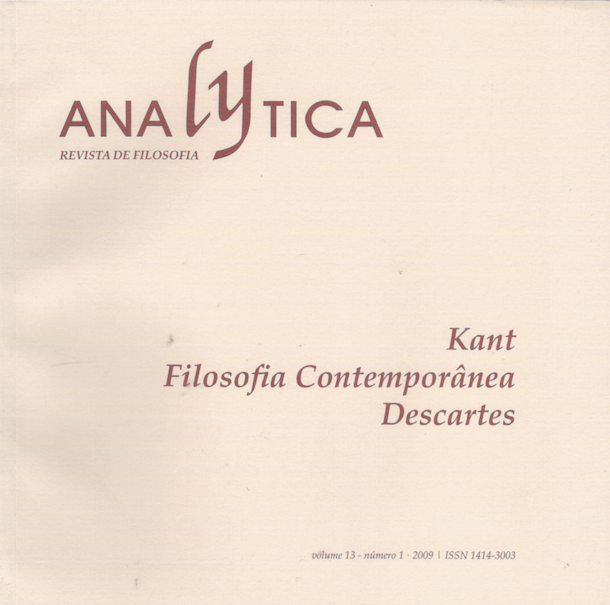
O conceito de filosofia em Kant: uma tradução e um comentário
Resumo
Este trabalho concentra as tarefas de tradução e de reconstrução e defesa do conceito de filosofia conforme esboçado por Kant em quatro fragmentos do período tardio do seu pensamento. A primeira parte consiste na tradução dos fragmentos com a referência paralela ao texto original alemão. A segunda parte apresenta o conceito de filosofia como antípoda do misticismo e como "doutrina da sabedoria". Chega-se a conclusão de que o conceito kantiano de filosofia é contraposto a uma concepção de filosofia que se funda numa intuição intelectual ou num sentimento, como o quer o misticismo, e, ainda, -- em divergência com a posição de Dieter Henrich -- que enquanto "doutrina da sabedoria" ele compreende tanto a filosofia teórica quanto a filosofia prática.
Abstract
The paper holds the tasks of translating as well as of reconstructing and arguing for the concept of philosophy as it is sketched by Kant in four fragments late in his life. Initially, the translation of the fragments in reference to the original German text is carried out. Secondly, the concept of philosophy as the antipode of mysticism and as "doctrine of wisdom" is presented. The conclusion reached is that the Kantian concept of philosophy is opposed to a concept of philosophy grounded upon intellectual intuition or feeling, as in mysticism, and, moreover, -- in disagreement with Dieter Henrich's position -- that as the "doctrine of wisdom" it embraces theoretical and practical philosophy.
Downloads
Downloads
Publicado
Como Citar
Edição
Seção
Licença
Os autores que publicam nesta revista concordam com os seguintes termos:
- Os autores mantêm os direitos autorais e concedem à revista o direito de primeira publicação, com o trabalho simultaneamente licenciado sob a Licença Creative Commons Atribuição-SemDerivações 4.0 Internacional (CC BY-ND 4.0), que permite a redistribuição, comercial ou não comercial, desde que a obra original não seja modificada e que seja atribuído o crédito ao autor.
- Os autores têm autorização para assumir contratos adicionais separadamente para distribuição não-exclusiva da versão do trabalho publicada nesta revista (ex.: publicar em repositório institucional ou como capítulo de livro), com reconhecimento de autoria e publicação inicial nesta revista.
- Os autores têm permissão e são estimulados a publicar e distribuir seu trabalho online (ex.: em repositórios institucionais ou na sua página pessoal) a qualquer ponto antes ou durante o processo editorial, já que isso pode gerar alterações produtivas, bem como aumentar o impacto e a citação do trabalho publicado (Veja O Efeito do Acesso Livre).